Trash owns Your electronics

Planned obsolescence is the reality we live in. Look at the slowed iphone scandal: https://www.wired.com/story/apple-iphone-battery-slow-down/

What are the chances that apple wanted older iphone customers to buy the latest and greatest model of Iphone on the market? If Bob’s iphone 3 stopped turning on, surely he would drop $800 on the new  I phone X. Though, there is no true confirmation of this; the given history of loyal customers having to buy new accessories for each new iteration of devices would make their will seem apparent . For years, electronics companies for been trying to figure out ways for the consumer to buy more and newer versions of their products than what is needed:

 Most of our electronic devices  are routinely replaced ever year or so. Every year, most of us go to our cellphone providers to get a new phone every due to problems with our current one that almost render it inoperable. Planned, engineered decay is not the only factor to consider in the short lifetime of our electronics:Computers, for example, need to be upgraded every 4 years to be compatible with the most widely used service packs for operating systems. Newer releases of programs like, photoshop, page maker and Microsoft office cease compatibility with older operating systems and thus older hardware. For comparison’s sake:The required ram for windows vista is 512 megabytes and the required ram for windows 10 is 2 gigagbytes. contrast, as of 2018, The Queen Mother’s refrigerator is 64 years old. Reliability has become a memory of the past. Though greed can be to blame, a more concrete cause as to why so many tech giants are following this trend is the hiding of trash: ���
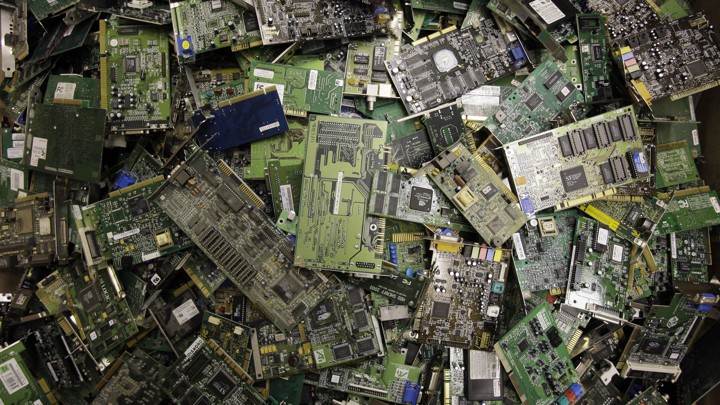
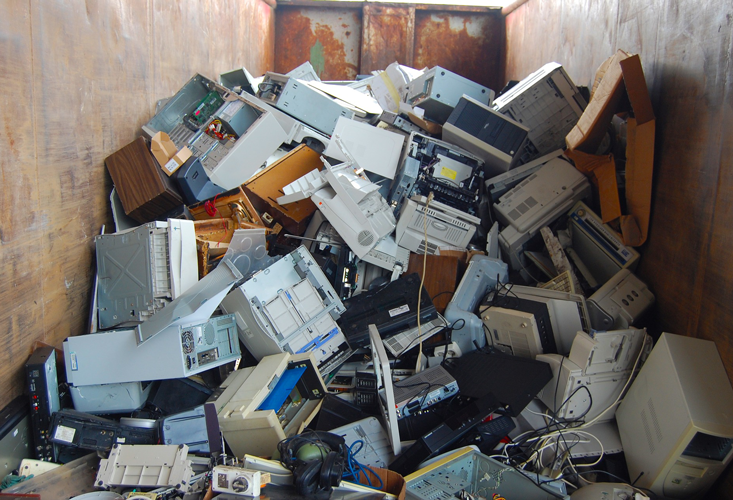
The throttle of yearly “upgrades” does have a cost beyond the wallet. Municipalities and any electronic corporate hegemony go to great lengths to keep hard to recycle, electronic waste out of site. Canadians generate beyond 14 million tons of e-waste a year:

https://globalnews.ca/news/2718497/electronic-waste-skyrockets-in-canada/

Jonathan Sterne writes in Out with the Trash, the Future of New Media writes: “The new computer or the budget for one, is a standard part of the hiring package for new faculty members in North American colleges. It is a sign of institutional health when the university replaces computers just to be up to date” (Sterne, 2). Sterne goes on to discuss various laws passed to address the issue of e-waste. In this blog, there simply is not enough room to cover all the legislative measures taken in the past 20 years. However, one must ask; Are we not already paying the cost of e-waste and not realizing it? No matter how it is construed, The accumulation of e-waste is costly to the environment. The costs will eventually , if not, already, transfer to the consumers. What I mean in laymen’s terms: We pay more than the dollar price at purchase by two effects: the cost of disposal and the planned economical changes for the product to become obsolete. Like security theatre, (the theatrical act of using non proven security measures to make one feel safe)the act of keeping the the electronic waste hidden makes use feel that we are purchasing a better more reliable item when we are not. If the e-waste was given as much attention as anti-smoking ads, it would be possible that consumers would begin to see more reliable and longer lasting media. Things such as government regulations pertaining to waste would be a much more publicly-cognitive reality . Though prices may go up, the damage to the consumer’s wallet in the long term would be less damaged and more true competition for quality will occur.

Security theatre tells us alot.

In a communications studies class and an instance of breaking the academic fourth wall; it was discussed in class as to whether we as a society actually care that we live under Cryptoptic and Panoptical surveillance. Though, the class, by enlarge agreed that it is a concern and that it bothers the population as a whole. I disagree. Surveillance perseveres as a cultural value in the world today because it tempers citizenry into docility for the matter. We merely recognize it and for the most part (and I do not mean completely), are  accepting of it. The most immediate example of this is the concept of security theatre.

We’ll inconvenience you to make you feel safe. Creds (hackaday.com)

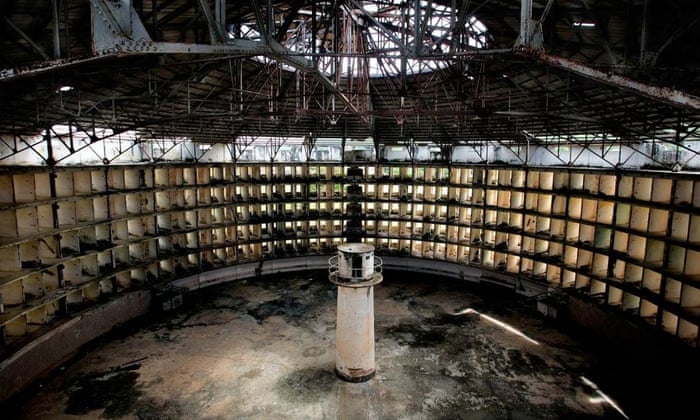
With the NSA, CIA and Jeremy and of course, corporate surveillance being so prevalent; it is easy to attribute society as being falling under Jeremy Bentham’s Panoptical model of surveillance. Large institutions and Governments act as the centre tower in the Panoptical illustration and the masses are the cell walls. This illustration should be thought of in the Cryptoptical sense as well; this is where I believe is a fundamental break in between most people. Some would argue that there is no gaze of punishment eyeing the consumers to those that act against accorded usage of networks such as social media and shopping networks Example; Facebook and Amazon. I disagree with this assertion. If you say something unpopular on social media or simply do not participate in a public dialogue on a prominent political stance, consequences can besiege you. Not saying anything about a Supreme Court nominee publicly? Co-workers may be hesitant to associate you without knowing your stance on the matter. This is no different without technologies involved. Roman tribes acted the same way without Facebook. In a sense; I am not so sure there truly is a cryptopticon that is different at all from the panoptical model.

In recent decades, both municipalities and market driven conglomerates have been increasing their use of surveillance as a deterrent rather than for investigative purposes. Traffic cameras are the perfect example of this. The airport security measures, such as xray machines fit in this category, right? An example of surveillance that does not underscore the asymmetrical relationship between authority and peer would be the monitoring of credit by banks.  Most would see this as a service, but of course, with credit checks, there is always another edge to that sword. Security theatre is the act of putting on a show in order for a populace to feel more secure. Check out the link below:

Good show: literally and metaphorically.

This controversy with game is an act  of security theatre; It only wants to make advertisers feel safe in the same way the TSA wants passengers to feel safe despite not being very effective at preventing security threats. Upon my assertion that the Cryptopticon and the Panopticon are one in the same; We truly are not concerned with mass surveillance as our own consumption, desires and expectations feed the surveillance and births a systemic form of self policing. We may, however, be concerned with abusers of mass surveillance and our concern mainly deals with how to address them.

Cryptoptics are one with the Panopticon ( creds: Institute for the Advanced Studies of Culture)

Autodesk could make Mickey the Ruler of all .

In 1998 the Alias systems corporation released their own 3d editing software; Maya. This program would go on to help produce blockbuster movies such as TOY story and Shrek. In 2005, Alias systems was bought by autodesk and thus with it, went Maya. In 2000 , a Quebecois company, Soft image, released its own 3d editing software to grab up some of the growing market work needed in the growing film industry. In 2008, Soft image was bought by Autodesk inc. If it is not already apparent, Autodesk inc, is a production software company that has had great success in buying up the competition 3d editing software. This is an an example of horizontal integration.

creds: AVPgalaxy.com

In 2017 Disney announced an acquisition deal of 21st century Fox. The deal would grant Disney the movie rights to variety of different franchises. Imagine Aliens vs predator with mouse ears. In the 1980’s, 90% of major films were produced by 50 different studios, today there are only 6.
This deal will bring the total number of major films from 6 to 5. Again, this yet another example of horizontal integration. Where does Autodesk fit into this post? If Disney were to buy Autodesk , it would then have a huge share of the means that other studios depend on when it comes to CG graphics. Digital cinematography is a key expense and a necessity for big budget films. If Disney were to acquire Auto desk, it would own the means of production of its content as well as other studios. In theory, Disney could lock out competition with its software use, forcing the editing software industry into something different. For example, the individual studios may have to start manufacturing their own editing software that is used in-house only. Those training to use such software in the industry would be faced with a dilemma similar to what branch of military an enlistee intends to serve in ( do you train to do animation for Disney or NBC Universal?). It would be a very silly but real dilemma of the same lens flare technology used in start trek to be proprietary to only Paramount . McChesney writes:“Vertical integration is a powerful stimulant to concentration; once new firms in an industry move in this direction others must follow suit or they can find themselves at an insurmountable competitive disadvantage” (Mcchesney, 180). This would be a move causing a lockout. This is vertical integration.

This is all speculation at the very greatest, but given that Autodesk has stopped selling perpetual licenses for their software, there truly isn’t any resistance from current consumers of the software: check herehttps://www.fxguide.com/featured/autodesk-going-subscription-only-heres-how-they-can-help-the-industry/

So what can be done? This is difficult to say. There is always government regulation. The Fox deal requires congressional approval. However, that may not be fruitful:“subjecting ideas, culture, and journalism to the market is problematic. Concerns about commercializing education, or the sheer revulsion at the idea of commodifying religion, point to the problems attendant to commercializing culture.” (Mcchesney, 189). Is it possible that the quality of film production will stagnate and turn backwards? Does fewer film production companies mean less creativity. Should Disney have so much power over our culture, being the dominant determiner of cultural values in film?